Supporting High School AI Research Projects in the Fraser Valley
At the Canadian AI Advancement Institute (CAIAI), our mission is to help Canadians learn, adapt, and succeed with AI. As part of this mission, we work with institutions, organizations, and communities to deliver meaningful AI education experiences that are practical, accessible, and impactful. Recently, the CAIAI assisted the Fraser Valley Regional Science Fair by providing subject matter expertise in artificial intelligence and machine learning.
Through the Canadian AI Advancement Institute’s involvement, students pursuing advanced digital technology projects were assessed through an informed industry lens and received meaningful feedback to strengthen their learning, confidence, and future development in AI research.
ABOUT THE FRASER VALLEY REGIONAL SCIENCE FAIR (FBRSF)
The Fraser Valley Regional Science Fair (FVRSF) is an annual STEAM-focused competition, founded in 1992, that invites students from kindergarten to Grade 12 in Langley, Abbotsford, Chilliwack, Mission, Hope, and Maple Ridge to design and present original science projects. Hosted by the University of the Fraser Valley, the fair gives students from public, independent, and home schools the chance to showcase inquiry-based work, interact with peers and judges, and receive public recognition and community-sponsored awards. Projects may be completed individually or in groups, and every accepted Grade 7–12 project is eligible to be chosen as a finalist to join Team BC and compete at the Canada-Wide Science Fair, with travel and participation costs covered.
The CAIAI worked with the Fraser Valley Regional Science Fair to support student innovation in Artificial Intelligence by contributing subject matter expertise during the fair’s senior digital technology judging process and through post-judging student mentorship. This assistance was welcome, as there are a growing number of student-led AI and machine learning projects emerging in secondary education, and as such, a need for knowledgeable industry professionals who could assess these projects.
This is where the Canadian AI Advancement Institute was able to help.
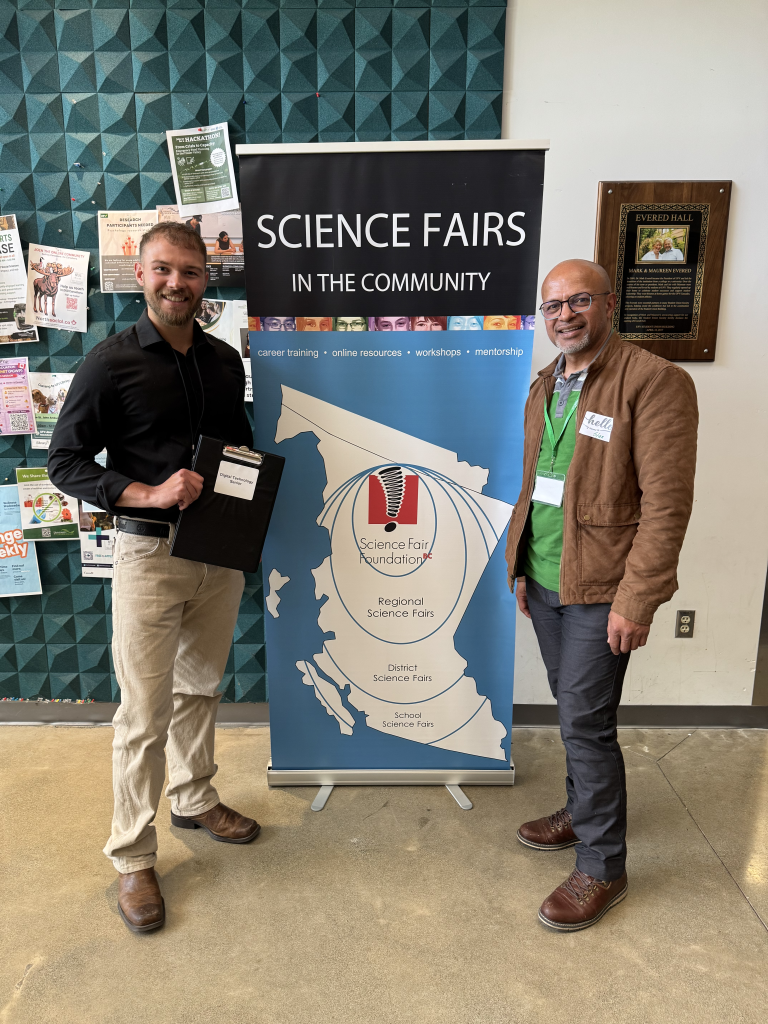
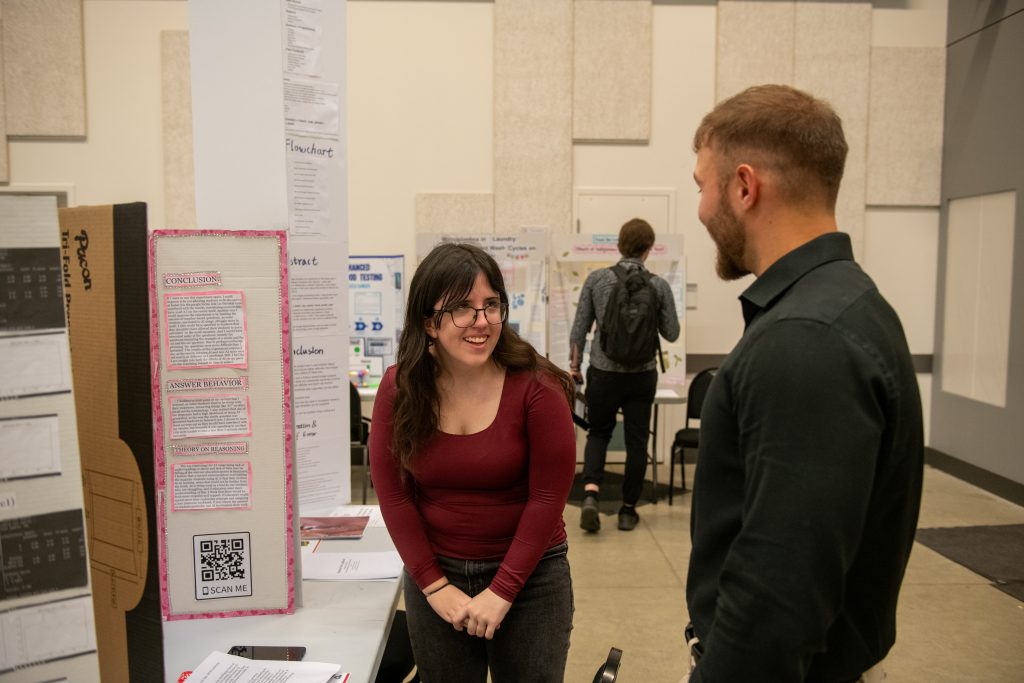
Our founder, Tristan Taylor, represented the CAIAI as a senior division judge in digital technology, supporting the evaluation of advanced student projects focused on machine learning, AI deepfake detection, and pattern recognition. Beyond formal judging, Tristan also provided mentorship and feedback to additional students with AI-related projects to help them refine their work and strengthen their preparedness for the next phase of competition.
The goal of this initiative has been to support emerging student researchers in learning, applying, and communicating AI concepts in a way that is informed, responsible, and practical.
So let’s dive into how we are taking this goal and turning it into a reality. At the CAIAI, we help Canadians adopt AI in four key steps: explore, educate, implement and adopt.
We begin with an introduction to Al, including potential opportunities and ethical and safety considerations.
Next, we take a deep dive into the learning process, assisting you in understanding key topics on Al.
Once you have the knowledge you need, we help you implement AI tools in your day-to-day and/or within your organization or institution.
At this stage, you are ready to share your knowledge and skills with others and can be a role model for others in this age of Al.
For the Fraser Valley Regional Science Fair, our strategy was to focus primarily on education through expert feedback and adoption through mentorship and encouragement to best position students for continued growth in AI learning. The most effective approach was hands-on engagement that combined project evaluation with practical guidance to maximize future academic opportunity.
Let’s take a look at our collaborations in greater detail.
Senior Division Digital Technology Judging
As part of the Fraser Valley Regional Science Fair, Tristan Taylor, founder of the Canadian AI Advancement Institute, participated as a judge in the senior division of digital technology. This initiative was designed to support high school students who had developed advanced research projects on Artificial Intelligence and machine learning, while also ensuring their work was evaluated by someone with relevant subject-matter expertise.
This judging role focused on reviewing student projects that demonstrated both technical ambition and strong real-world relevance. One research project included a student-trained machine learning model designed to identify whether a voice recording was an AI-generated deepfake or an authentic human voice. The student developed the project in response to growing concerns around AI deepfakes, fraud, and extortion, drawing inspiration from the personal story of a family friend who had been targeted by criminals using a deepfaked version of their child’s voice. The second project applied machine learning to identify differences in bird colour patterns across various North American locations, using data analysis and pattern recognition to examine species variation.
These projects reflected the growing presence of AI research in secondary education and how students are beginning to engage with machine learning in thoughtful, practical, and socially relevant ways. Through the judging process, the CAIAI contributed informed evaluations, encouraged ongoing AI research, and helped validate the importance of AI learning at the high school level.
Post-Judging Student Mentorship and Feedback
Following the formal judging process, the initiative extended beyond evaluation and into mentorship. Tristan also provided feedback and guidance to other students who had pursued AI-related projects, helping them reflect on their work and prepare for the possibility of advancing to the next phase of competition.
This mentorship component was especially valuable because it gave students the opportunity to hear from an AI subject matter expert after their projects had been assessed. Rather than limiting the experience to scoring and judging alone, the collaboration created space for students to ask questions, better understand the strengths of their work, and identify areas for future improvement. This gave students added insights and encouragement as they continue their learning journey.
Together, these two parts of the initiative demonstrated a practical and meaningful model for supporting AI education. The judging process supported student-led AI innovation, while the mentorship component helped students build confidence, deepen their understanding, and prepare for future opportunities in research and AI learning.
A key outcome of this initiative was the quality and relevance of the student projects themselves. The projects reviewed demonstrated that high school students are already engaging with sophisticated AI topics, including AI deepfake detection, machine learning model training, dataset preprocessing, and pattern recognition. Just as importantly, the projects showed that students are beginning to connect AI research to real social and scientific issues reflecing a growing level of AI literacy and innovation among youth in the Fraser Valley.
Looking ahead, the Canadian AI Advancement Institute remains committed to supporting schools, educators, and students through meaningful AI education initiatives that encourage responsible learning and exploration. Whether through project support, guest speaking, research feedback, workshops, or broader classroom engagement, there is a significant opportunity to continue helping students build the knowledge and confidence they need to navigate the AI era.
We look forward to creating more opportunities for meaningful engagement and equipping high school learners with the tools they need to learn, adapt, and succeed with AI.