City buildings icon representing organizations

Table of Contents

Mo Chen - Physical AI and Robotics Expert

Mo Chen is an Associate Professor in the School of Computing Science at Simon Fraser University, where he is principal investigator of the Multi-Agent Robotic Systems Lab and holds a Canada CIFAR AI Chair hosted at the Alberta Machine Intelligence Institute. He is a talented physical AI and robotics expert and co-founder and Chief Technology Officer of Ma Robot Responsible AI, which builds navigation software for robots working in healthcare settings. Mo shared his expert insights with the Canadian AI Advancement Institute in August 2026, and we cite those insights in our AI literacy materials.

  • AI expert in physical AI, robot navigation, and safety-critical machine learning.
  • Supporting CAIAI in advancing AI and robotics literacy.
  • Academic and professional achievements include, but are not limited to, a PhD in electrical engineering and computer sciences from the University of California, Berkeley, a BASc in engineering physics from the University of British Columbia, a Canada CIFAR AI Chair, an Amii Fellowship, a distal fellowship of the Natural Sciences and Engineering Research Council of Canada Canadian Robotics Network, and a Best Paper Award on Cognitive Robotics from IEEE in 2022.
  • Currently serving as an Associate Professor at Simon Fraser University, as co-founder and Chief Technology Officer of Ma Robot Responsible AI, and as a visiting professor at Stanford University, where he previously served as a postdoctoral researcher from 2017 to 2018.

About Mo Chen

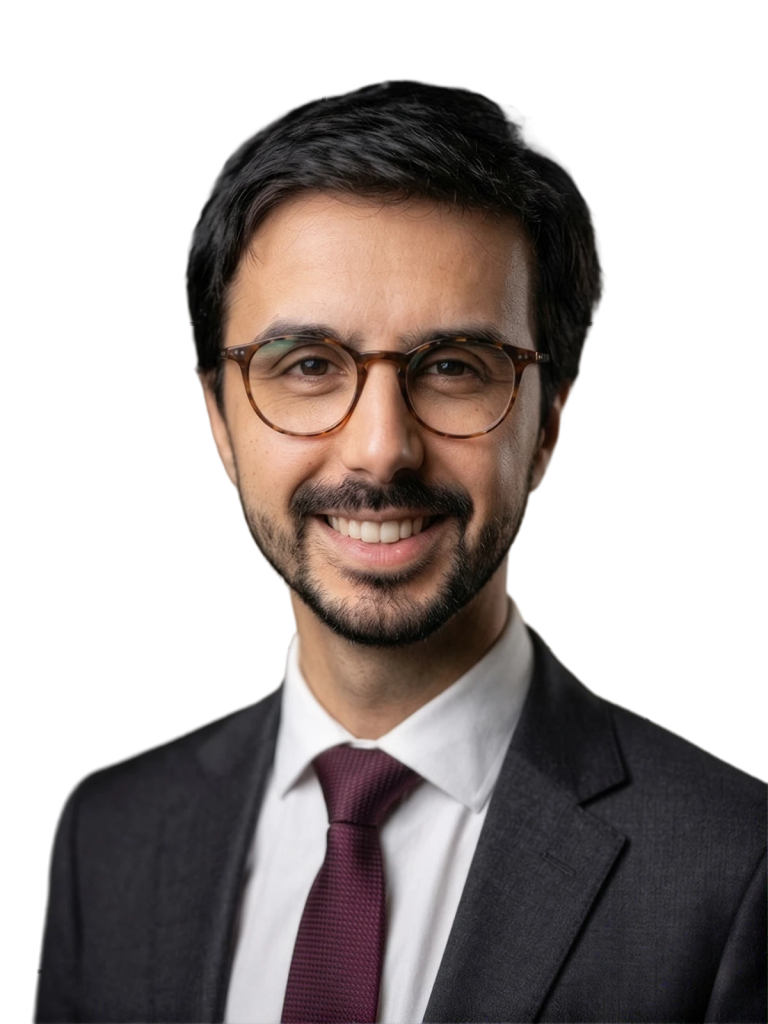
Mo Chen headshot

Chen specializes in AI that acts in the physical world, particularly with robots moving through spaces full of people. He started at the University of British Columbia intending to become a doctor, went to a talk on robotics in his first year, and switched to engineering physics. His doctorate at Berkeley took him into algorithms and safety, and machine learning followed. His lab now works on indoor robot navigation and on the theory underneath it, including credit assignment: how a system works out which of its own earlier decisions caused a good or bad outcome, and how it updates without forgetting what it already learned. He collaborates closely with Angelica Lim of SFU’s ROSIE Lab, and the two labs built an autonomous shopping cart that anticipates where its owner is heading.

He defines physical AI broadly as any AI meant to interact with the real world physically, and he is direct about why it is harder to develop than the virtual kind. The internet supplied the text that trained today’s models; nothing comparable exists for robots, because the world was never instrumented to record itself in three dimensions.

Two constraints run through his account of the work. Robots have to think locally, because a severed connection cannot be allowed to stop a fleet of hospital robots and turn them into obstacles in a corridor that is already busy. And they need social intelligence as well as physical intelligence: a warehouse robot negotiates with other robots in a controlled space, while a hospital robot has to read that one person is in a hurry and that a patient having a bad day does not want a machine rushing at them.

Chen's Contributions to AI Literacy at CAIAI

Mo's Expert Insights

Chen appears in Season 1 of our recorded expert insight interviews. He covers what physical AI is and why data is its bottleneck, how a robot’s form factor changes how people react to it, what robotics is already doing in healthcare, and how students use AI well and badly.

  • Digital Insights, Season 1: A recorded interview on 14 August 2026, covering physical AI, robotics in healthcare, AI literacy, AI grant funding in Canada, and commercializing academic research.

Excerpts from a Physical AI and Robotics Expert

“I think, especially as an educator, I do feel my role here to tell everyone about how AI works. Maybe I won’t tell people my prediction of the future, but I would like to educate people on how AI works in general, not just computer science students, but engineering students, business students, and sort of the general population.”

“One thing I noticed is that the students who are able to use AI correctly, they’re using the AI to learn. They’re not simply outsourcing their understanding. So they’re doing really, really well. They’re developing and growing really, really fast.”

“In the warehouse, the interaction of robots is with mostly other robots and the very carefully set up controlled environment of the warehouse. But now in the hospital, there’s staff, there’s people walking around, there’s patients, so the robot now needs social intelligence.”

Learn More About Mo Chen

Chen's Work Beyond CAIAI

  • Professional accomplishments: Directs the Multi-Agent Robotic Systems Lab at Simon Fraser University and co-founded Ma Robot Responsible AI, whose navigation software has been tested in busy hospitals and at conferences. His research spans multi-robot systems, motion planning, safety-critical systems, reinforcement learning, and human-robot interaction, and his awards include the Eli Jury Award in 2017 and the Demetri Angelakos Memorial Achievement Award in 2016.
  • Advocacy: Argues for better AI awareness education well beyond computer science, on the grounds that understanding how a model produces an answer is what lets a person be properly critical of it. He also argues for interpretable, modular systems over end-to-end ones, because a robot’s behaviour has to be changeable in one situation without degrading it in another, and he presses people to ask whether they are using AI to learn or to outsource their own development.

Thank You, Mo

We are grateful to Mo for sharing his expertise in healthcare, robotics, machine learning, and AI.

Learn More About Our Featured AI Experts

Reach Out To The CAIAI